Monte Carlo and Baden-Baden: The Great Casino Cellars of Europe
October 10, 2026
Long before Las Vegas, Europe's grand casino towns understood that great gambling and great wine belong together. Two of them, Monte Carlo on the Mediterranean and Baden-Baden in the Black Forest, still hold that tradition: one above one of the largest hotel cellars in the world, the other surrounded by its own vineyards.
Monte Carlo: a casino built on a rock
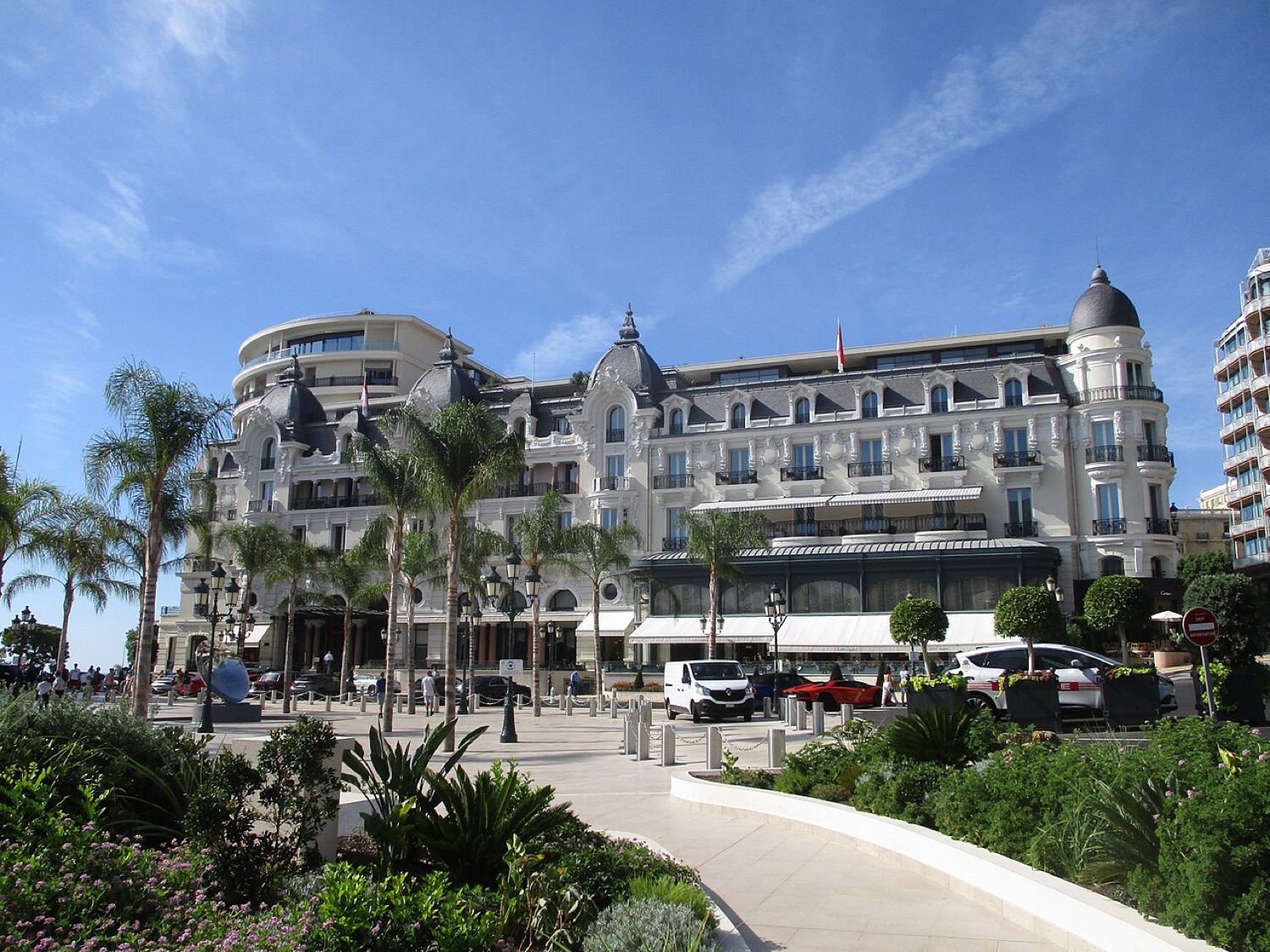
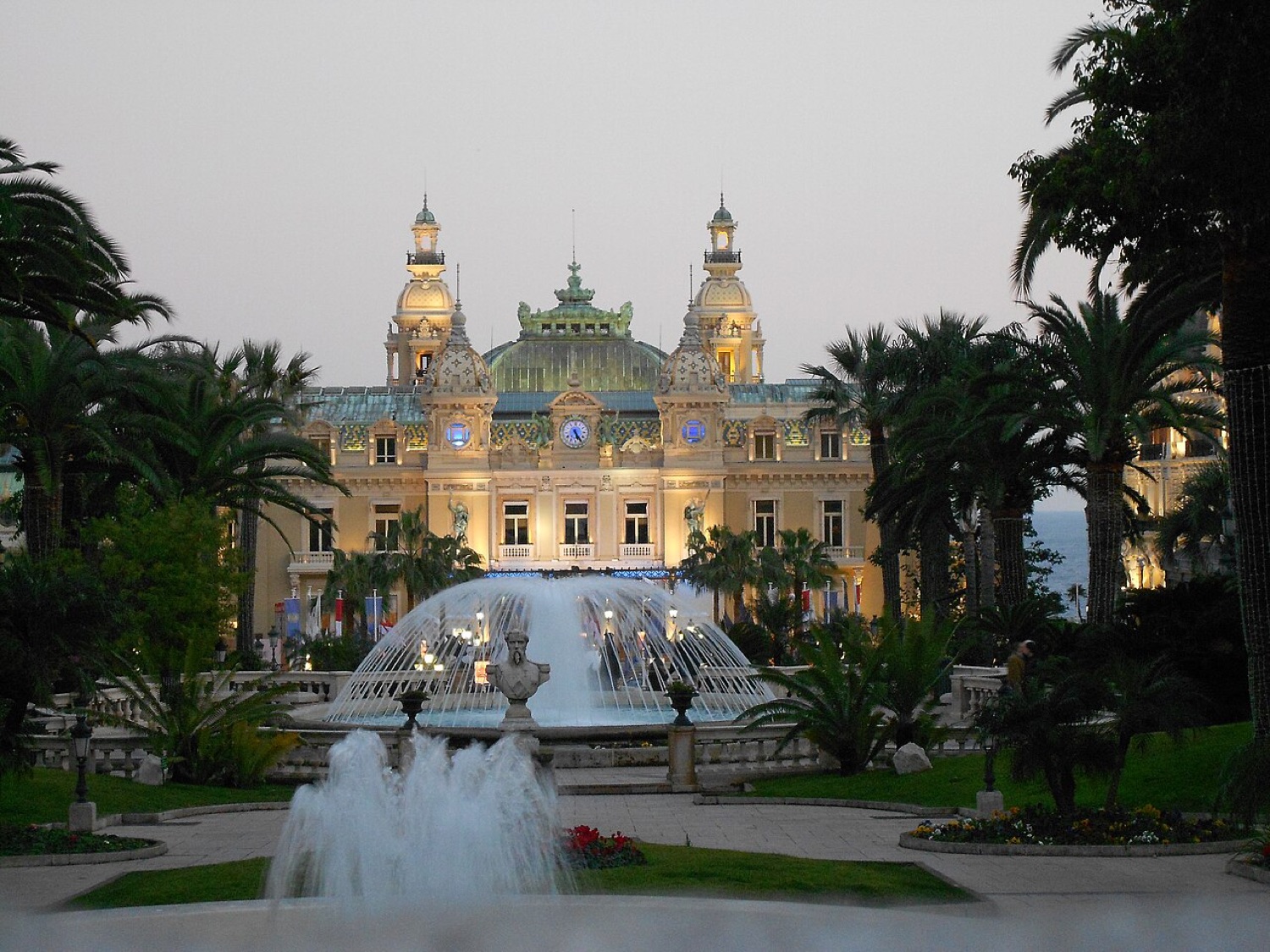
The Casino de Monte-Carlo opened in the 1860s, part of a bold plan by Monaco's ruling family and the entrepreneur François Blanc to turn a poor principality into a resort for Europe's rich. The company that runs it, the Société des Bains de Mer, also built the Hôtel de Paris next door, which opened in 1864. The casino building itself was enlarged by Charles Garnier, architect of the Paris Opera, at the end of the 1870s, and the gilded gaming rooms have changed surprisingly little since.
The cellar beneath the Hôtel de Paris
In 1874, at the initiative of Marie Blanc, the wife of François Blanc, a cellar was dug into the rock beneath the Hôtel de Paris. It has grown into one of the largest hotel wine cellars in the world, covering about 1,500 square metres and holding a few hundred thousand bottles, with figures of 300,000 to 350,000 quoted in recent years. During the Second World War, staff are said to have hidden the most precious vintages behind a false wall of empty bottles to keep them from the occupying forces. The cellar celebrated its 150th anniversary in 2024.
The list is built for the casino's clientele: deep in Bordeaux, Burgundy and Champagne, with large formats for tables celebrating at the Salle Blanche or the private rooms. California has a place too, and fine Napa Cabernet, including mountain wines like those of the Spring Mountain District, appears beside the first growths.
Baden-Baden: the spa casino
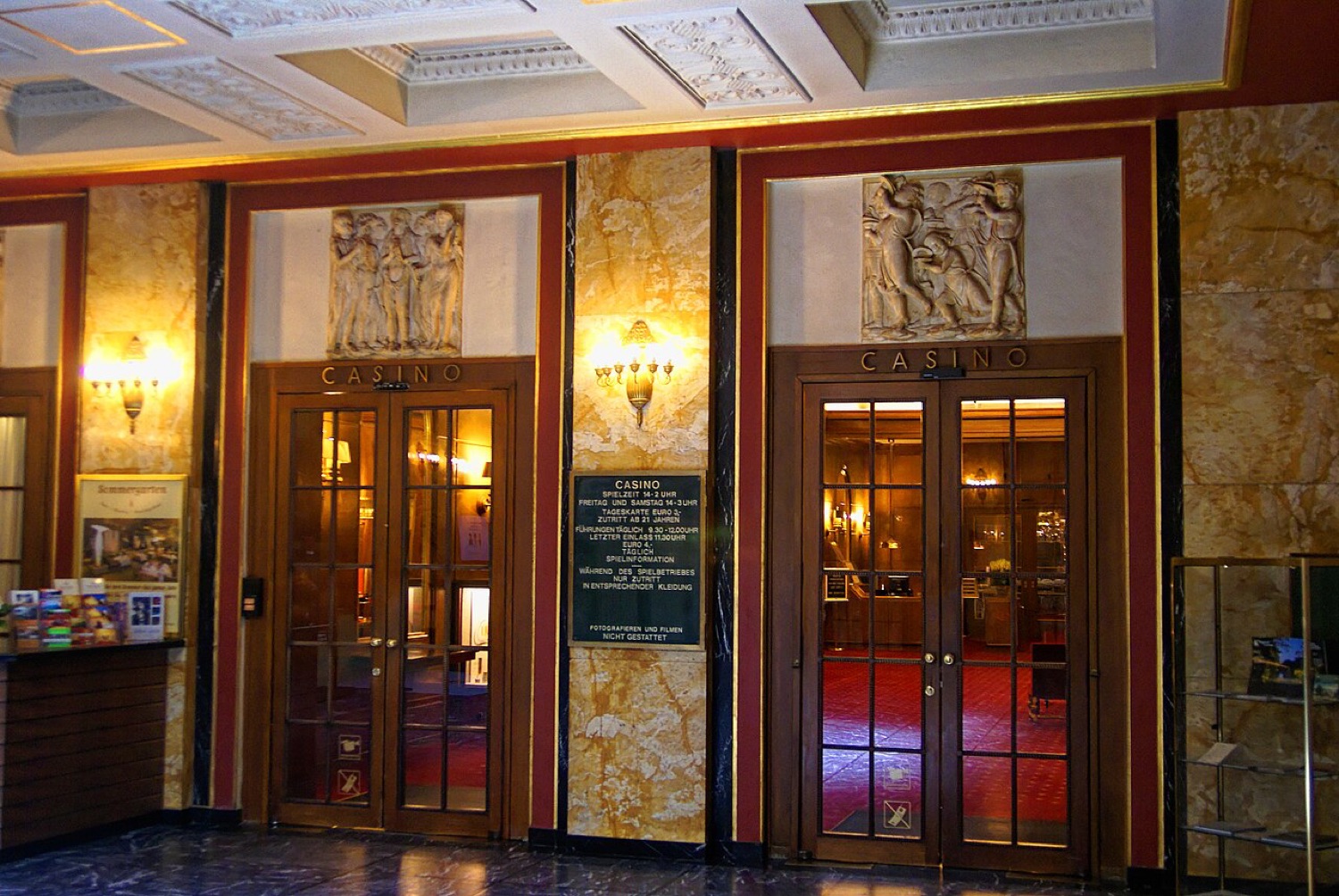
Baden-Baden's casino occupies the Kurhaus, a neoclassical spa building of the 1820s. Gambling took off here in the late 1830s, when France banned public gaming houses and the Parisian impresario Jacques Bénazet moved his business across the Rhine. Under Bénazet and his son Édouard, Baden-Baden became the summer capital of Europe, drawing aristocrats, composers and writers. Fyodor Dostoevsky lost heavily at its tables in 1867, and his novel The Gambler draws on the German spa casinos he knew. The gaming rooms, decorated in the style of French palaces, are among the most beautiful in the world; Marlene Dietrich is often said to have called it the most beautiful casino of all.
A casino town with its own vineyards
Unlike Monte Carlo, Baden-Baden is wine country. It lies in Baden, Germany's southernmost wine region, and the town's own Rebland districts, including Neuweier, Varnhalt and Steinbach, climb the slopes above it. Riesling and Pinot Noir, called Spätburgunder here, are the main grapes, and a few local villages are among the rare places outside Franconia allowed to bottle wine in the flat, round Bocksbeutel flask. An evening at the casino often starts with a glass of local Riesling and ends with a bottle from the Kurhaus restaurant's deeper list.
What Napa can learn from the old casino towns
Both towns show how a casino can anchor a wine culture rather than distract from it. In California the pairing is younger, but it is growing: see casinos in California wine country for the closest equivalents, and the great wine lists of Las Vegas casino resorts for the American heirs to Monte Carlo's cellar. For a reminder of how Napa first won the respect of Europe's wine establishment, read the Judgment of Paris.