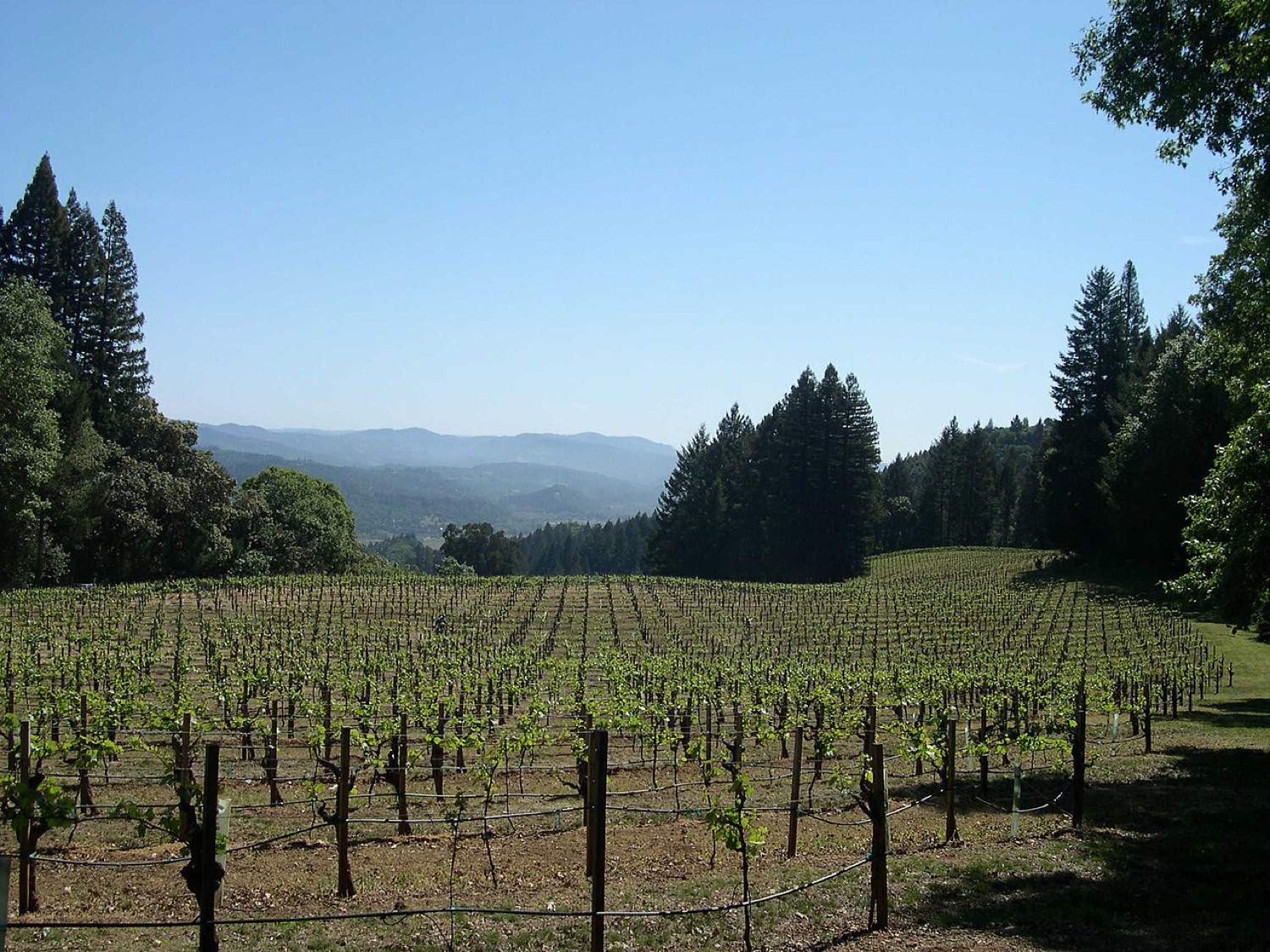
Mountain Viticulture: Why Hillside Vines Make Intense Wine
August 21, 2026
Ask a Napa grower why mountain wine tastes different and you will hear one word more than any other: stress. Not the dramatic kind that kills a vine, but the steady, low-level struggle of roots working through rock for water and nutrients. That struggle shapes everything from the size of the crop to the colour of the wine.
Altitude, fog and the cooler morning
A vineyard even 400 feet above the valley floor sits in a slightly different climate. On a typical Napa summer morning, fog fills the valley while the hillside vines are already in sunshine, yet by mid-afternoon the slopes stay a few degrees cooler than the flats. Because cool air drains downhill at night, mountain sites also avoid the coldest valley-floor mornings, which reduces spring frost risk. The net effect is a slightly later flowering than on the valley floor and a longer, steadier ripening season.
Poor soil, small berries
Hillside soils on Spring Mountain and the other Mayacamas slopes are shallow and stony. The fruit from such sites makes intense wine precisely because the soil is not too rich: vines put less energy into leaves and shoots and more into a small crop. The berries are small, so the ratio of skin to juice is high, and skins are where colour, tannin and many aroma compounds live. Typical yields on mountain sites run around one to two tons per acre depending on the weather, compared with four tons or more on many valley-floor vineyards.
When the rootstock cannot cope
Shallow soil has limits. In thin pockets where rock sits only a foot or two below the surface, some rootstocks simply cannot produce much fruit, and growers often end up replanting a few rows with a different rootstock or a different grape. It is common on mountain estates to see a small block of Cabernet replaced by Syrah, which tends to cope well with stony ground and still produce a balanced crop. That kind of row-by-row decision-making is the daily reality of mountain farming.
Hillside vs valley floor (typical Napa ranges)
- Yield
- About 1–2 tons per acre on steep mountain sites; often 3–5 on fertile valley land
- Flowering
- A little later on the hillside
- Berries
- Smaller, thicker-skinned, higher skin-to-juice ratio
- Labour
- Mostly by hand; many slopes too steep for machines
- Frost risk
- Lower on slopes, as cold air drains to the valley
- Wine style
- Darker, firmer tannins, longer ageing potential
The harvest call: a hand of poker every autumn
Every mountain grower plays the same game each September and October. The longer the grapes hang, the riper and more concentrated they become, but every extra week risks an early autumn rainstorm, a heat spike or, in recent years, wildfire smoke. Picking is a bet with real numbers behind it. If a grower thinks there is a one-in-four chance of a damaging storm next week, and an extra week of hang time would lift the value of the crop by ten percent, the expected value says wait; if the forecast pushes that chance towards one in two, the same maths says pick now. Good growers think in exactly these terms, even if they would never call it gambling. Poker players will recognise the logic of pot odds, which we explore in blind tasting and poker: wine as a game of odds.
The weather lottery also explains why the same hillside makes different wine every year, and why critics publish vintage charts. Our guide to reading a vintage chart explains how to use them without being misled.
Erosion, terraces and the cost of a slope
Hillside vineyards in Napa County must follow strict erosion-control rules, and new plantings on steep slopes require detailed plans. Terracing, cover crops, drainage and hand labour all add cost. Spring Mountain growers accept all of that because the wine can be extraordinary. To see how this plays out on one appellation, read our Spring Mountain District guide.